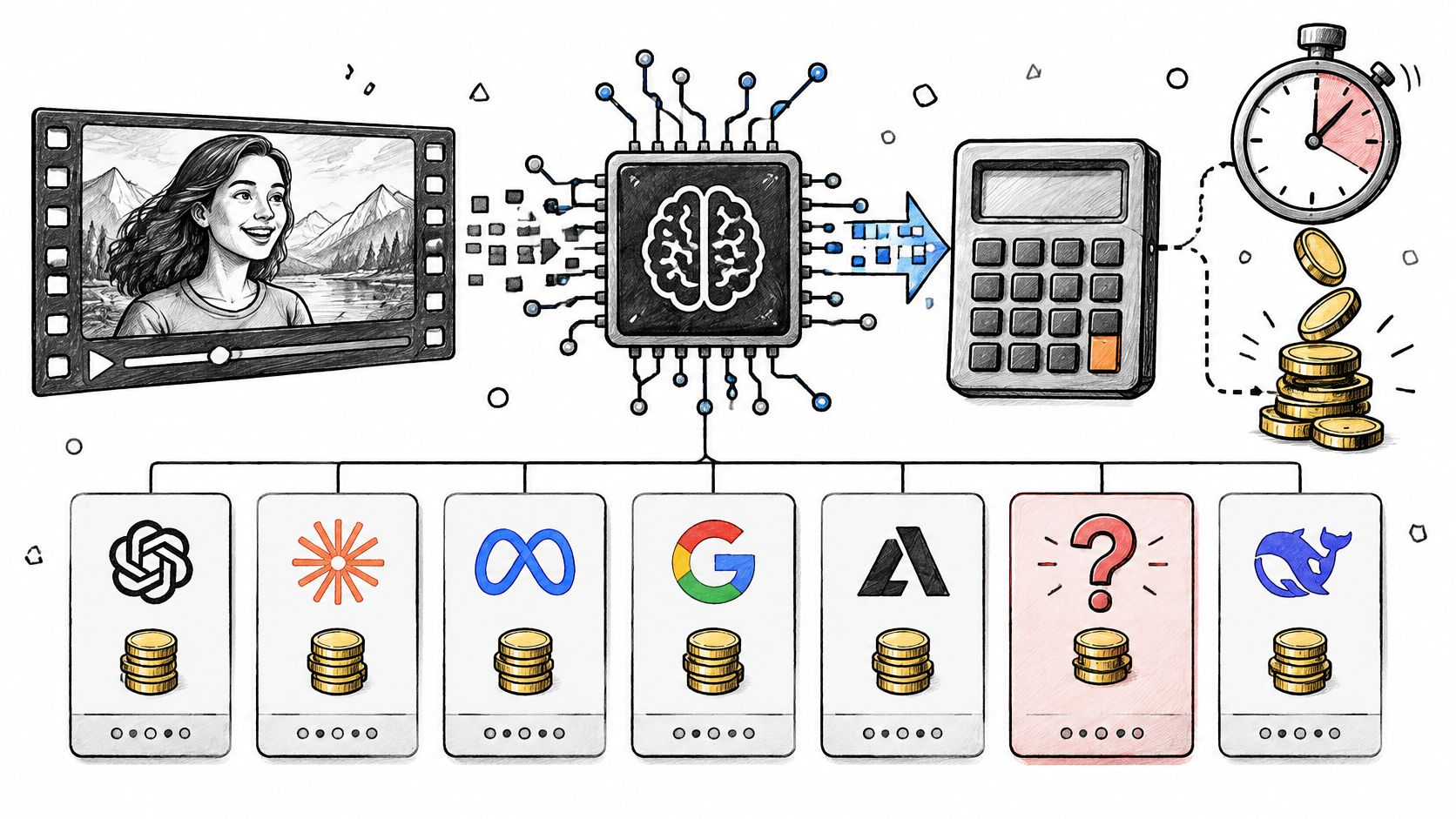
The most repeated advice about cheap AI video generation is to sort the price list and take the smallest number per second. That advice survives right up to the first invoice.
A listed rate describes one model at one resolution on one billing basis. It doesn't describe the clip you need. A model quoted at 360p can cost several times more at 1080p, and a model that bills input video on top of output can cost double the advertised rate before a frame renders. Then comes the retry tax: a cheap endpoint that needs three attempts per usable shot is not cheaper than a pricier one that lands on the first try.
Cost per usable second survives contact with a real project. It's the rate at your delivery resolution, multiplied by the attempts a model needs, adjusted for audio and billing blocks. The gap between that figure and the headline rate is where budgets go wrong.
The options below cover the low end of the market: Replicate's Wan endpoint, fal's MiniMax Turbo, Google's Veo Lite tier, Wan 3.0 through both Cloudflare and Alibaba, BytePlus's Seedance Mini, and Runway Dev's multi-model catalog. UberLLM sits in front of all of them as a routing layer.
Table of Contents
- 1. UberLLM Routes Each Request to the Cheapest Healthy Seller
- 2. Replicate Lists Wan 2.2 S2V at $0.02 per Second
- 3. fal Lists MiniMax H3 Max Turbo at $0.025 per Second
- 4. Google Gemini API Lists Veo 3.1 Lite at $0.05 per Second
- 5. Cloudflare Workers AI Prices Wan 3.0 by Resolution
- 6. Alibaba Cloud Model Studio Keeps Wan 3.0 First-Party
- 7. BytePlus ModelArk Prices Seedance 2.0 Mini at $0.04
- 8. Runway Dev Spans $0.02 to $0.68 per Second on One Bill
- Listed lowest per-second rates across the six video APIs
- Choose by Cost per Usable Second, Not the Headline Rate
1. UberLLM Routes Each Request to the Cheapest Healthy Seller
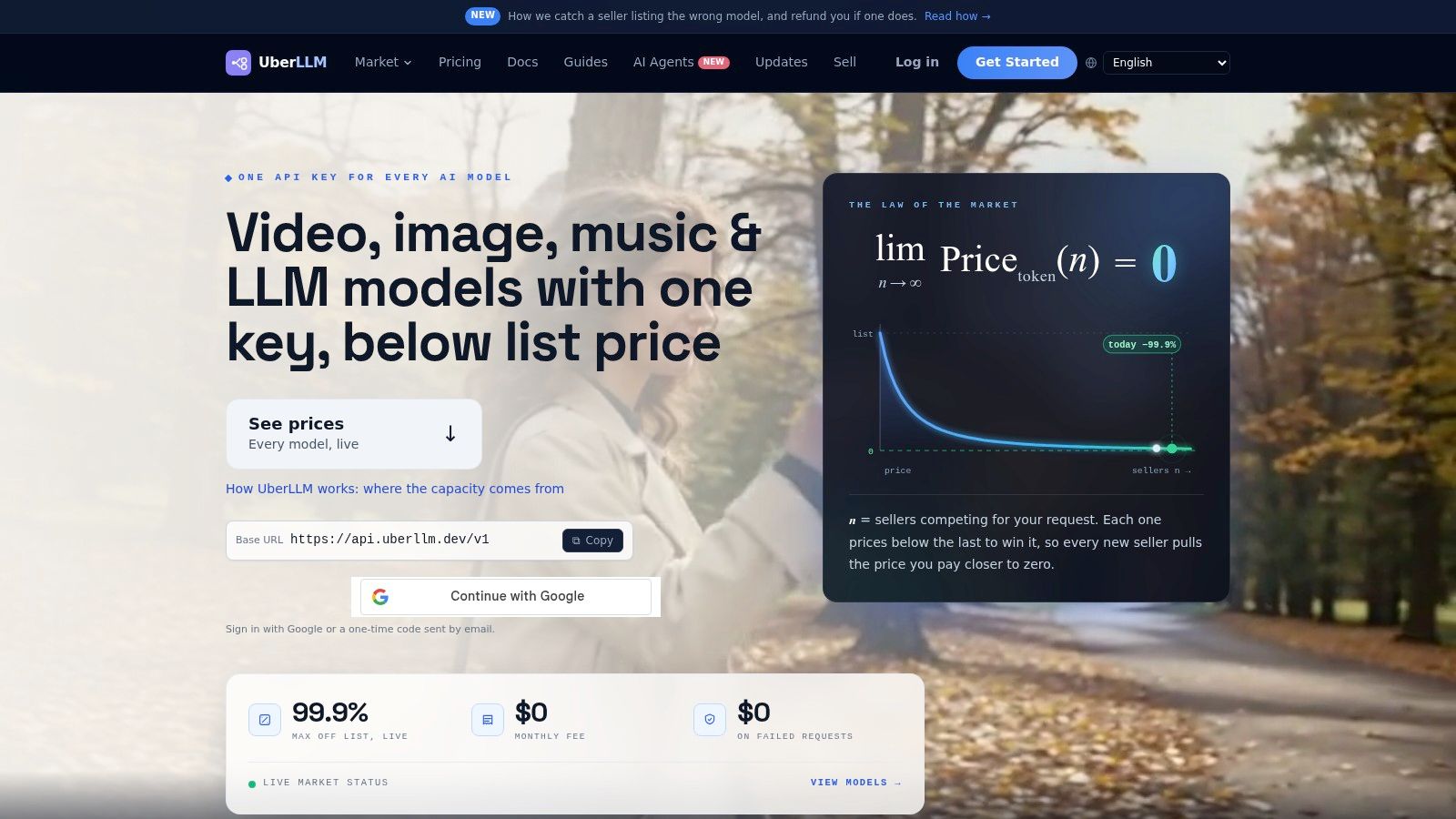
UberLLM aggregates inference sellers behind a single API key and one endpoint. Third-party model providers and sellers with unused capacity compete for each request, and routing sends it to the cheapest healthy seller for whichever model your identifier names. The catalog covers text, image, video, music, and speech.
For video budgets, the structure matters more than any single rate. Claude, GPT, Gemini, DeepSeek, FLUX, Kling, and Veo sit behind the same credentials, so switching models means changing an identifier rather than rebuilding an integration. OpenAI-compatible and Anthropic-compatible interfaces keep existing SDK code in its current shape when you repoint the endpoint and credentials. Long media jobs run asynchronously with polling and webhook callbacks, and a dashboard playground lets you compare outputs and parameters before production traffic arrives.
Why failed renders stop being a hidden cost
Billing mirrors provider charges, with no separate request fee, no monthly fee, and no minimum. Per UberLLM's video API pricing page, failed requests and failed generations are not charged.
That's the line most video budgets get wrong. A project that needs four attempts per usable shot pays four times the listed rate on a provider that bills every attempt. On a marketplace that bills only completed generations, the three dead renders cost time and nothing else.
Practical rule: judge a video API by what it charges for a failed render, not only a successful one. On short clips that line moves the total more than the headline rate does.
Routing works against whatever rates providers publish. Kling's own documentation lists Kling 4.0 Flash at $0.094 per second under a no-input-video condition, per Kling's base video pricing table. Whether routing beats a published rate depends on which sellers hold capacity for that model at the moment you request it, so read the live listing rather than a summary of it.
One prepaid balance covers every supported modality. Card top-ups carry a percentage-plus-fixed fee charged on each addition rather than per request, so funding in larger, less frequent increments shrinks the fixed portion's share of spend.
UberLLM suits teams that want one credential and one balance across several video models without holding an account at each lab. It fits poorly when a project needs a single vendor's SLA, support contract, and roadmap commitment on one model.
2. Replicate Lists Wan 2.2 S2V at $0.02 per Second
Replicate sells access to callable model endpoints, so the bill follows the model page rather than a platform wide video tier. Wan 2.2 S2V sits among the lowest per second priced options in this comparison and bills on output video seconds, but the exact rate should be read on the endpoint page before it goes into a budget.
Scope is the catch. A low number on one Wan endpoint does not describe Replicate's whole video catalog. Other video models on the same platform bill at their own rates, and some are priced by hardware time rather than output seconds, which changes the retry math.
A published text-to-video API price comparison lists Seedance 1.0 Pro Fast at roughly $0.006 per generated second through EvoLink, against managed rates such as Runway Gen-4 Turbo at $0.05 per second and Grok Imagine Video 1.5 Lite at $0.03 per second. The same comparison cautions that the lowest figure may be a reseller or promotional channel price, so availability can depend on the route rather than the model name.
For budgeting, normalize every endpoint to cost per accepted 10 second clip: listed rate times billed seconds, times attempts per usable shot, plus any hardware time billed while a job runs. Then apply the endpoint checks before committing spend.
- Read the model page, not the marketplace homepage. Duration caps, output format, queue behavior and billing basis live there.
- Run your actual prompts. A small batch on your working script exposes format limits and rejection modes faster than a benchmark table.
- Divide spend by kept footage. The rate that matters is total cost per accepted second, not requested second.
Used this way, Replicate works as a low cost draft tier for storyboarding and concept validation, while final delivery belongs on whichever model produces approvable output under your prompts.
3. fal Lists MiniMax H3 Max Turbo at $0.025 per Second
A social team that needs 40 variants by Friday will land on fal's MiniMax H3 Max Turbo endpoint fast. At 2.5 cents per second, the Turbo rate looks like the obvious engine for the job, and one integration covers both text-to-video and image-to-video.
What you pay depends on billing behavior the rate card doesn't advertise. Queue time, timed-out requests, and failed renders are treated differently across platforms, so the number that matters is spend divided by accepted output. A cheap endpoint that bills a render that never finished costs more than its list price; an endpoint that only bills completed seconds keeps the retry problem contained.
Speed belongs in the price comparison
A controlled comparison of five-second, 720p-class clips found MiniMax H3 Max turning in a three-second median generation time, against 23 seconds for the slowest endpoint tested. The same comparison lists MiniMax H3 Max at $0.08 per second, more than three times the Turbo rate on fal's catalog.
Price and latency share one scorecard. A model that finishes in three seconds lets a small team iterate in an afternoon; one that takes 23 seconds per clip turns the same afternoon into a queue-management exercise.
That gap costs money in ways the rate card never shows. Slow endpoints hold concurrency slots, force longer timeouts, and push you into building polling and retry logic you'd otherwise skip. For a batch of 40 variants at three renders each, latency decides whether the job finishes before the campaign does.
The practical takeaway is narrow: fal is a good place to run MiniMax cheaply and to compare models through one integration. Pricing is per endpoint, so each model carries its own rate and its own resolution ladder. A budget sized against one endpoint's number will not transfer to the rest of the catalog.
4. Google Gemini API Lists Veo 3.1 Lite at $0.05 per Second
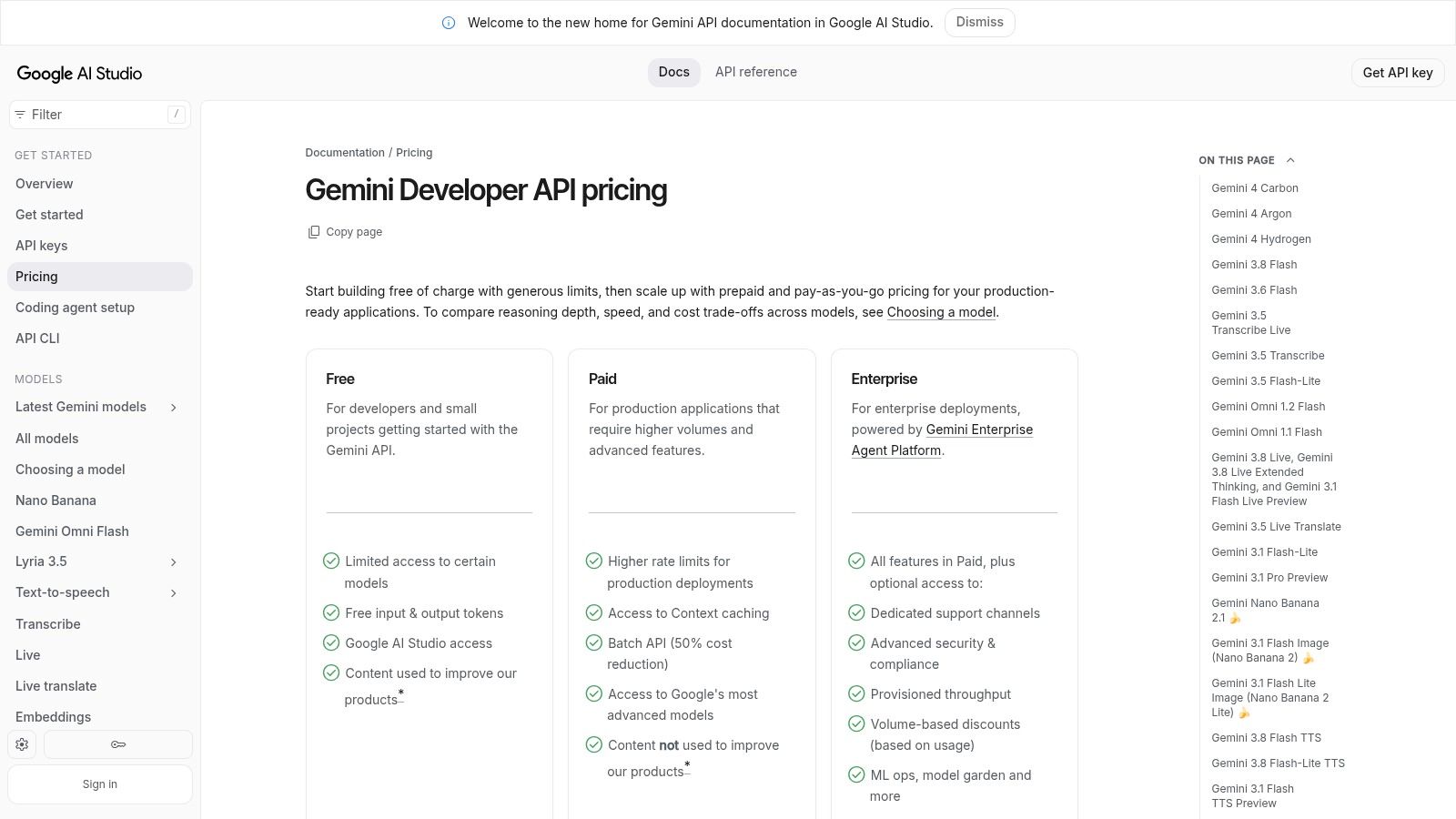
Google sells Veo 3.1 directly through its developer platform. Veo 3.1 Lite is listed at $0.05 per second at 720p with audio and $0.08 per second at 1080p on the Gemini API pricing page. Fast and Standard tiers sit higher, and Veo 3.1 isn't available on the free tier.
Audio included at the Lite tier changes the ranking more than the headline number suggests. If your workflow adds a soundtrack anyway, a silent render plus a separate music pass has to beat $0.05 a second to justify itself, and it usually doesn't.
Where Google's models land across channels
A cross-platform comparison of video generation APIs lists Veo 3.1 Fast at $0.10 per second without audio and $0.15 with audio. The audio toggle is worth more than the tier difference: turning it off saves a third of the rate on that model, and turning it on doubles what the cheapest Lite render costs.
Distribution matters as much as the tier. A Runway Dev pricing comparison put Gemini Omni Flash 1.1 at $0.10 per second at 720p and identified it as the lowest rate in that set. The cheapest Google video rung moves between model generations and resale channels, so a rate quoted six months ago is not a benchmark.
- Direct access wins on version control. You get new model releases and quota through one console instead of waiting on a reseller.
- Resale wins on experimentation. Multi-model platforms expose rival models on the same balance, which is faster when you're still choosing.
- Neither wins on price alone. At these rates, a single failed batch costs more than the difference between tiers.
To see Veo output before committing to an integration, Veo 3.1 on AI4Chat runs the model in a browser against your own prompts.
5. Cloudflare Workers AI Prices Wan 3.0 by Resolution
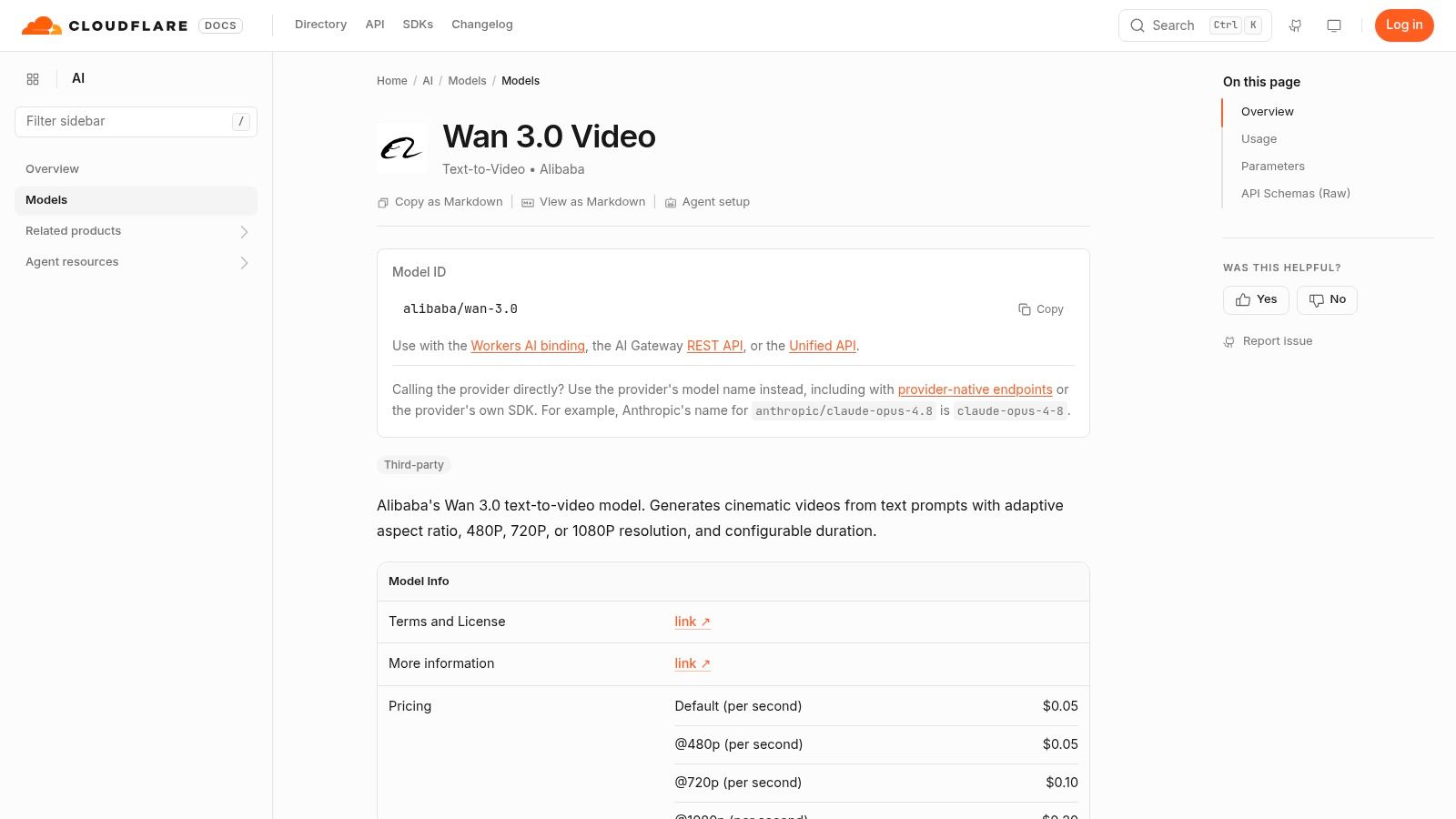
Wan 3.0 on Cloudflare starts at $0.05 per second at 480p, rising to $0.10 at 720p and $0.20 at 1080p, according to Cloudflare's Wan 3.0 model page. Duration and aspect ratio are configurable, and access runs through Workers AI bindings or documented API routes.
The four-times spread between the entry and top tier is the whole story. A ten-second clip costs $0.50 at 480p and $2.00 at 1080p for the same prompt, the same model, and roughly the same wait. Teams that prototype at the entry rate and deliver at the top rate budget four times more per render than the headline figure suggests.
Billing units cost more than rate differences
A comparison of API pricing against subscriptions notes that Luma bills in five-second blocks, so an eight-second request can be charged as ten, while Runway bills model-specific credits per second. The same comparison reports median generation times for five-second clips ranging from about three seconds to nearly two minutes.
Block billing punishes exactly the clips social teams make most. An eight-second request billed as ten seconds pays for two seconds you never use, and a three-second request on a five-second floor still pays for five. The shorter the deliverable, the larger the markup over its metered length.
Before you compare two rates, check the minimum billing increment and the per-generation floor. The lower number on the page can produce the larger invoice.
On short-form work, the billing unit often decides the invoice. A flat per-second rate with no minimum beats a lower rate with a five-second floor almost every time.
Generation time carries the same hidden cost. A clip that renders in seconds can be regenerated cheaply, while one that takes two minutes per attempt turns every retry into queue time.
Cloudflare's advantage is placement. If your application already runs on Workers, the model is one binding away and needs no new vendor relationship, no separate key rotation, and no additional egress path. That operational saving doesn't appear in a per-second table, and for small teams it's often larger than the rate difference.
6. Alibaba Cloud Model Studio Keeps Wan 3.0 First-Party
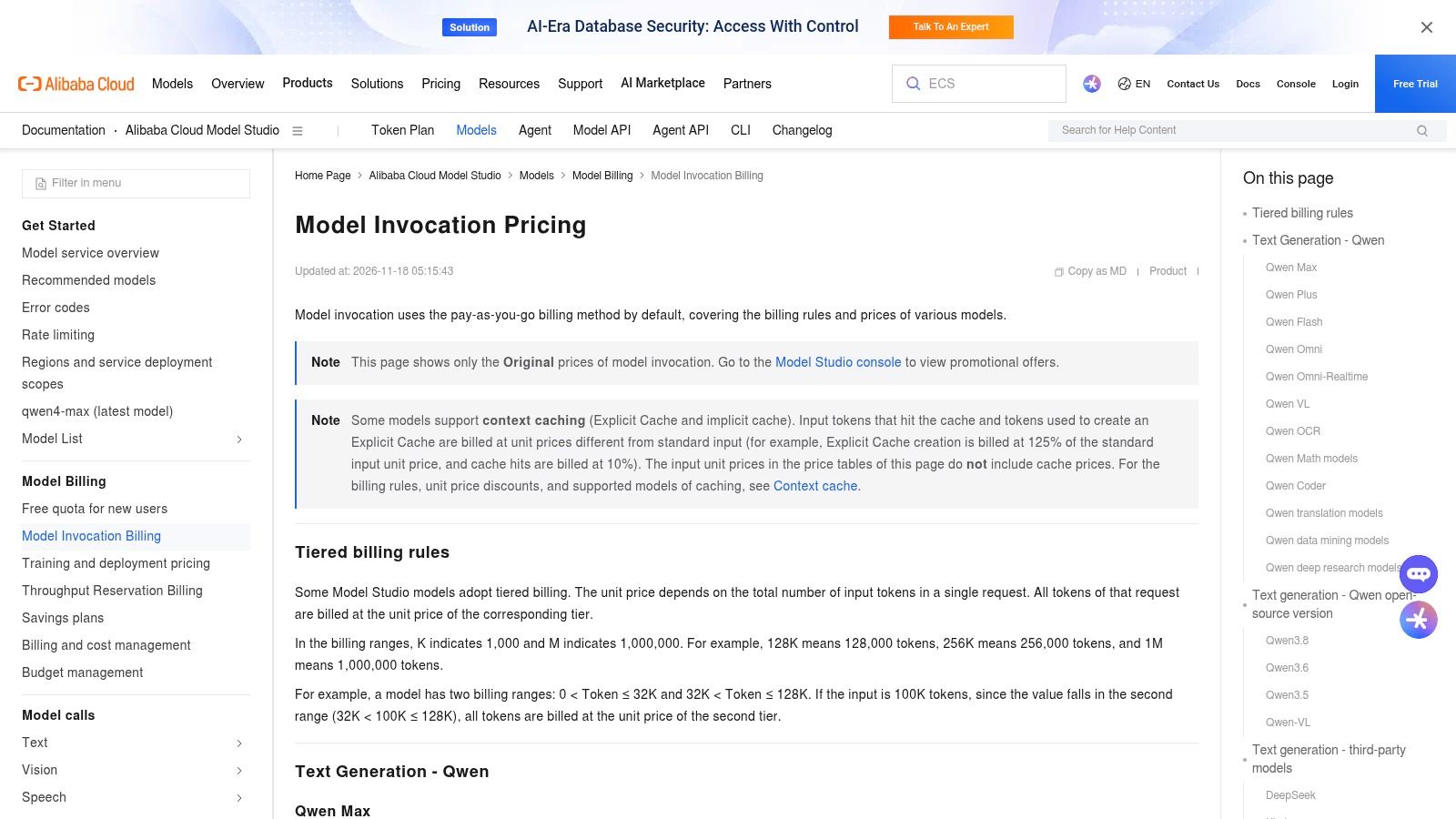
Alibaba publishes Wan video rates by output resolution in its Model Studio pricing documentation, with video billed on generated duration. The entry rate belongs to the lowest resolution tier, and each step up the ladder multiplies it. Anyone quoting a single Wan figure without naming the resolution is quoting a floor, not a price.
Buying first-party buys three things a wrapper can't match. Model versions arrive here first, quota is negotiated against your own account, and the commercial relationship sits with the lab that trained the model.
The trade-off is operational, not financial
The rate ladder matches what resellers publish, so price rarely decides this. Setup does. An Alibaba Cloud account, a region choice, an access key policy, and quota management are more work than copying one API key from a lighter platform.
That work pays off under specific conditions:
- Volume. Sustained monthly spend justifies a direct commercial agreement and the quota conversation that comes with it.
- Version sensitivity. Teams that need a new Wan release on day one can't wait for a reseller to list it.
- Regional delivery. Latency and data residency requirements point toward choosing the endpoint region yourself.
For a marketer testing three prompts, the same setup is overhead with no return. A credit-based platform removes the account work and the billing reconciliation, which matters more when the total spend is in the tens of dollars.
One caution on scope: don't carry the Wan rate across the rest of the Model Studio catalog. Each model on that pricing page has its own unit and its own resolution logic, and the video durations are billed differently from the text tokens.
7. BytePlus ModelArk Prices Seedance 2.0 Mini at $0.04
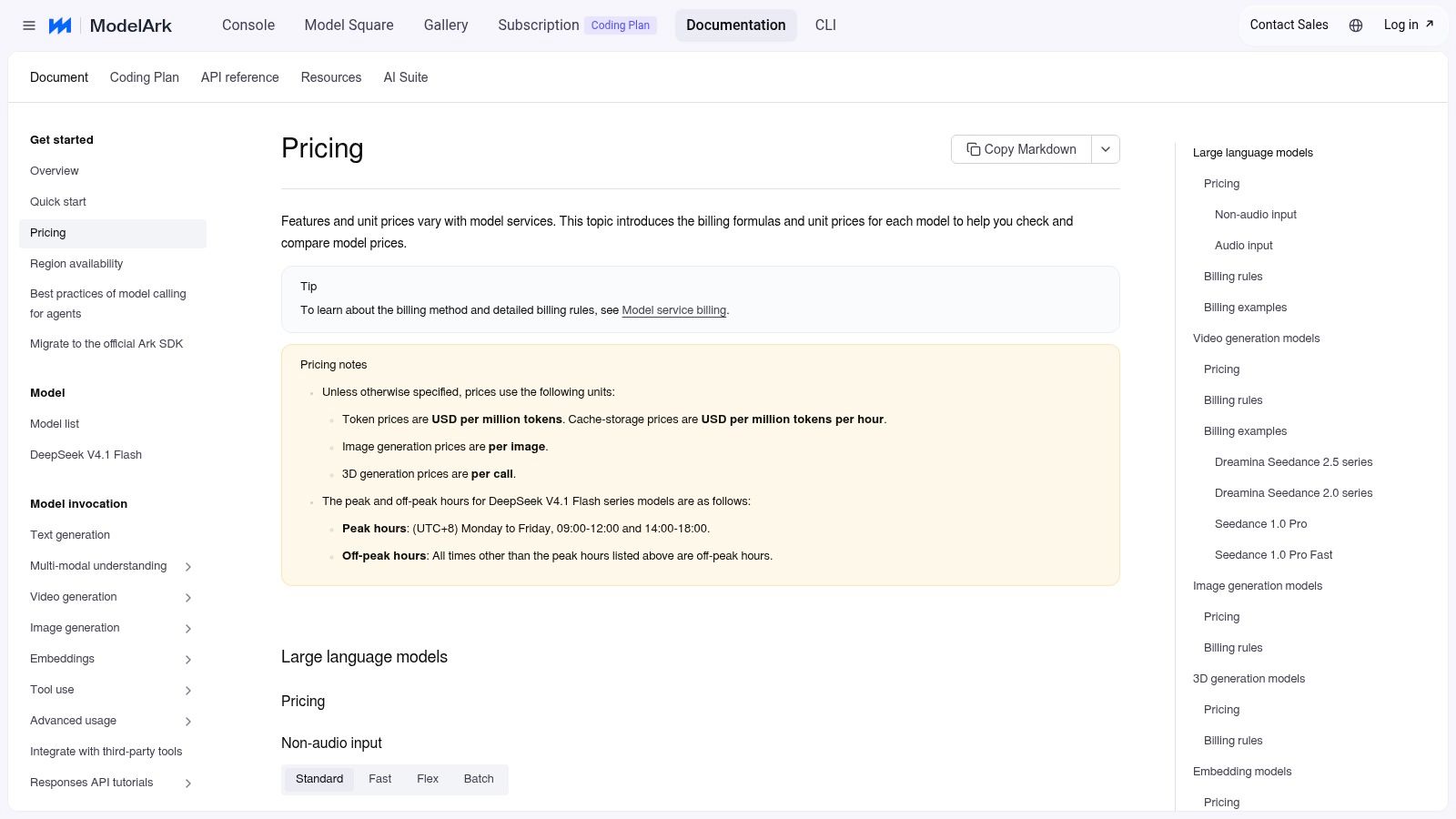
BytePlus ModelArk gives developers access to ByteDance's Seedance family. Seedance 2.0 Mini appears in pricing examples at $0.04 per second at 480p and $0.08 per second at 720p, per BytePlus ModelArk's model pricing page. BytePlus states unsuccessful generations aren't charged.
Read the first sentence of that paragraph carefully. Those per-second figures are estimates derived from examples tied to token usage and generation settings, not a flat rate card. A different resolution, duration, or input video produces a different number, and the difference is not small.
Why input video is the expensive variable
Kling's developer pricing shows the mechanism clearly. When reference or input video is supplied and runs no longer than the output, Kling bills total duration as twice the output duration. A 10-second output with qualifying input video is billed on 20 seconds.
Run the arithmetic and the cheap rate inverts. Kling 4.0 Flash in input mode bills at 0.4 units per second, so a 10-second output costs 8 units. The same model with no input bills at 0.6 units per second for 10 seconds, or 6 units. The nominally cheaper rate produces the more expensive generation.
The rule generalizes to every provider on this list. Calculate billable seconds, not advertised output seconds. Then multiply by the billable unit and compare that figure across models.
Before you commit: ask what happens to the bill when you supply a reference clip or an edited source. Reference-driven workflows are where per-second comparisons quietly fall apart.
Seedance's tier structure is still useful for one job in particular: comparing Mini, Fast, and standard variants at the same resolution on the same prompts. The cost difference between tiers tells you what quality costs, which is a more useful number than the cheapest rung on any rate card.
8. Runway Dev Spans $0.02 to $0.68 per Second on One Bill
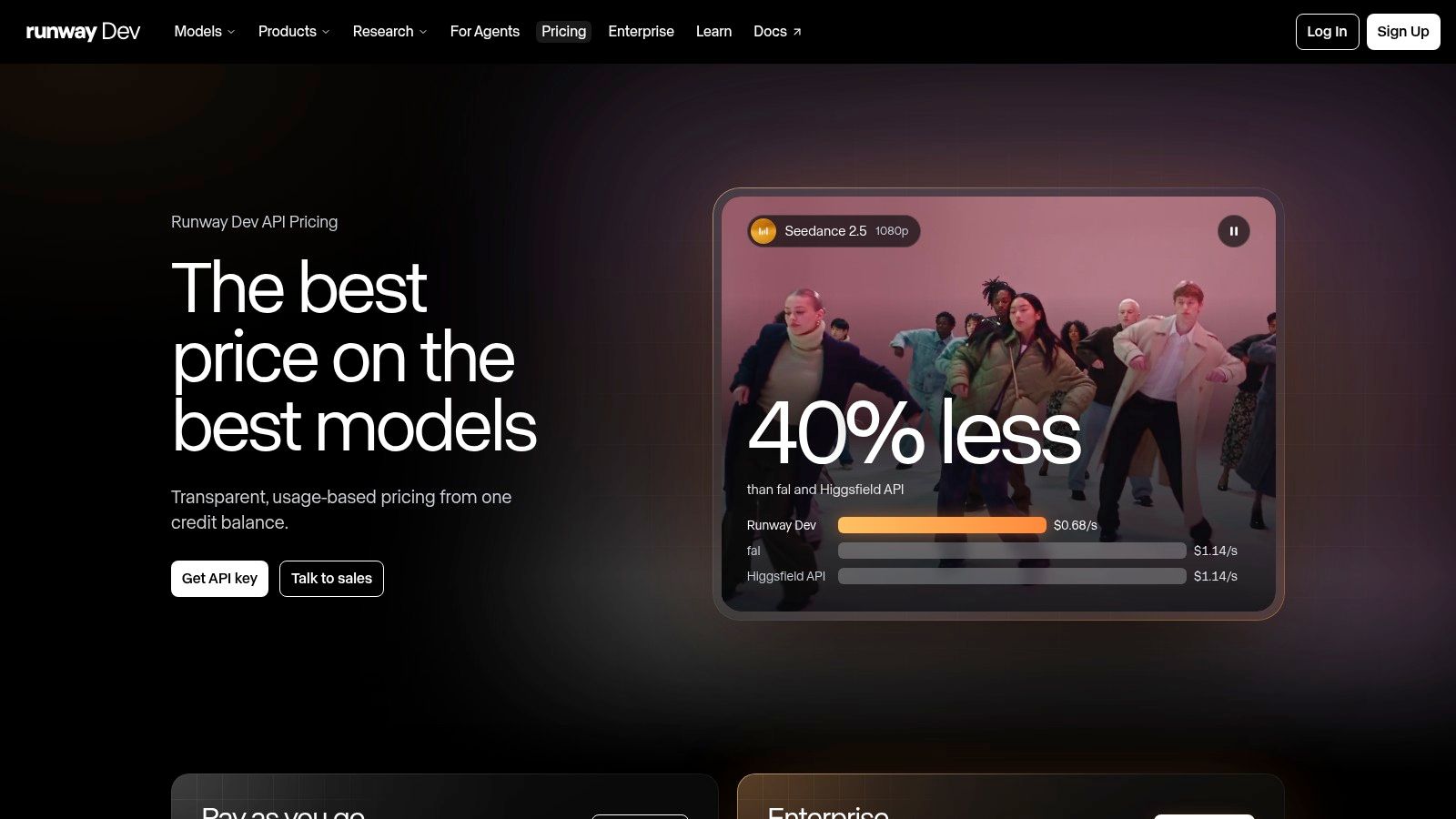
Gemini Omni 1.2 Flash is the lowest-priced rung on the Runway Dev pricing page, listed at $0.034 per second at 360p and stepping up to $0.07 at 720p, $0.10 at 1080p, and $0.21 at 4K. At the 360p rate, a 5-second clip costs about $0.17, a 10-second clip about $0.34, and a minute of footage about $2.04. At 720p those same three totals become $0.35, $0.70, and $4.20.
Resolution, not model choice, drives most of that ladder. The same endpoint costs roughly six times more at 4K than at 360p, which makes "cheapest per second" a statement about draft settings rather than production work. Three 10-second attempts at 360p cost about the same as one 1080p attempt, so the floor rate only stays cheap while retries stay cheap too.
The same account reaches 20 times higher
A 10-second, 1080p Seedance 2.5 clip costs $6.80 through Runway Dev, or $0.68 per second, per Runway Dev's integration guide. That is twenty times the 360p Omni rate, inside one account and one credit balance.
One balance across models is useful for A/B testing, because you can put the same prompt through a draft endpoint and a premium one without new billing setup. It also means any "average platform rate" is fiction. Budget by endpoint, at your delivery resolution, and treat the platform-level number as noise.
- Draft at the floor. Storyboards, social tests, and concept validation run at the cheapest resolution that still reads correctly in a review.
- Deliver at the rate you quote clients. Anything that ships at 1080p or 4K gets budgeted at that tier from the start.
- Exclude retries from the floor. The $0.034 rate assumes first-attempt success, which is the assumption least likely to hold.
Runway's catalog also carries Kling releases for teams comparing motion styles on one balance; Kling v2.1 on AI4Chat is a browser route to the same model family if you'd rather not integrate first.
Listed lowest per-second rates across the six video APIs
Sorted by the lowest number on each pricing page, six endpoints set the floor. Two of them tie at $0.02 per second, though one is a single Wan endpoint on Replicate and the other is a 360p draft tier inside a multi-model account.
| Provider and endpoint | Lowest listed rate | Resolution of that rate | Best for |
|---|---|---|---|
| Replicate, Wan 2.2 S2V | $0.02 per second | Lowest offered tier (entry resolution) | Low-cost experimentation with the Wan 2.2 S2V endpoint |
| Runway Dev, Gemini Omni 1.2 Flash | $0.02 per second | 360p | Testing multiple video models through one developer account |
| fal, MiniMax H3 Max Turbo | $0.025 per second | Lowest offered tier (entry resolution) | Low-cost text-to-video or image-to-video through a multi-model API |
| BytePlus ModelArk, Seedance 2.0 Mini | $0.04 per second | 480p | Comparing Seedance variants and their cost-capability trade-offs |
| Cloudflare Workers AI, Wan 3.0 | $0.05 per second | 480p | Developers already building on Cloudflare |
| Google Gemini API, Veo 3.1 Lite | $0.05 per second | 720p with audio | Direct Veo access, especially for teams using Google's developer platform |
For the two aggregator rows, the floor applies at the lowest resolution the endpoint exposes. Across this table, entry tiers run 360p to 480p, which makes Veo 3.1 Lite the outlier: the only listed floor that reaches 720p and includes audio in the rate.
Read per usable second, the ordering tightens. At ten seconds, the band runs from $0.20 to $0.50 per attempt, a cent and a half per second separating cheapest from priciest. That gap buys a full output class, from draft resolution to something you could ship.
Choose by Cost per Usable Second, Not the Headline Rate
The method is short enough to run this week.
- Fix the delivery resolution. Write down what ships. If it's 1080p, every 480p comparison on the page is irrelevant to your budget.
- Estimate attempts per usable clip. A new model on a new prompt style usually needs more than one try. Three is a fair planning number for a model you haven't tested.
- Multiply. Rate at your resolution, times clip length, times attempts. Add upscaling and any separate audio pass.
- Validate on your own prompts. Run ten real prompts through two candidates, count the clips you'd publish, and divide total spend by accepted seconds.
That last step is the only one that produces a decision. The lowest listed rates in this comparison belong to specific endpoints at low resolutions, and a rate at 360p or 480p tells you nothing about whether the output clears your quality bar at delivery size. Approve the footage first, then the invoice.
Two things worth checking before you commit volume. Confirm the minimum billing increment, since five-second blocks and per-generation floors add cost that per-second math hides. Then confirm the failed-generation policy, because a model that bills every attempt effectively costs double when it succeeds half the time.
If you want programmatic access across several video models without opening an account with each lab, AI4Chat's API Access provides endpoints for video generation alongside chat, image, speech, and music. Custom API plans with higher limits are arranged by contacting us with an estimate of your monthly request count, and video generations start at 500 credits with model-specific costs listed on the Pricing & Credits page.
Start with the batch you'd ship. Take ten prompts, run them at your real delivery resolution on two providers, and compare what you spent against the seconds you kept. That number, not the rate card, is the one to plan next quarter around. Current credit costs for every model sit on AI4Chat's pricing and credits page.