Introduction
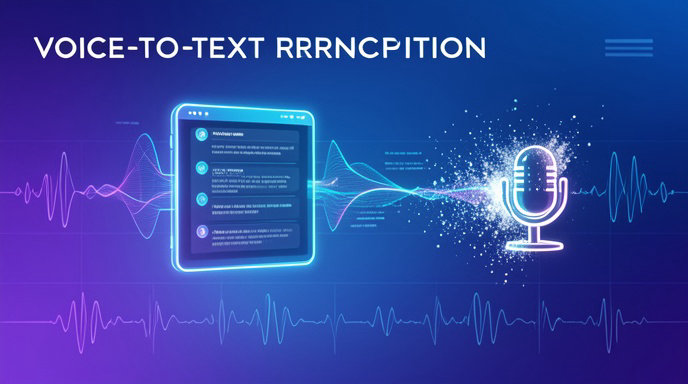
Can ChatGPT transcribe audio? Yes, but only in specific supported workflows—not as a universal, built-in “upload any audio and get perfect text” tool. In practice, transcription usually works through ChatGPT’s audio features or OpenAI’s speech-to-text models, and the output is best treated as a draft transcript that often needs review.
Below is a comprehensive blog-style draft you can use or adapt.
If you want a quick answer: yes, ChatGPT can transcribe audio in some supported setups, but it is not the right tool for every transcription job. The bigger question is not whether it can transcribe audio, but how it does it, what level of accuracy you can expect, and when a dedicated transcription app will do a better job.
What “transcribing audio” actually means
Audio transcription is the process of converting spoken language into written text. In modern AI workflows, that usually happens in two steps: a speech recognition system listens to the audio and produces text, and then a language model may clean up, summarize, or reformat that text. That distinction matters, because ChatGPT is not always the part doing the actual speech recognition.
Can ChatGPT transcribe audio?
The short answer is yes, sometimes. But the exact behavior depends on which ChatGPT product, plan, device, or workflow you are using.
There are three common ways people mean this:
- Record mode inside ChatGPT, where you speak into the app and it turns your speech into text after you finish recording.
- Audio file upload, where you upload a supported file such as MP3, WAV, M4A, or WEBM and ChatGPT processes it into text.
- Speech-to-text through OpenAI models or APIs, where transcription happens in a separate workflow and ChatGPT is used afterward for cleanup, summaries, or analysis.
In other words, ChatGPT can be part of a transcription workflow, but it is not always the standalone transcription engine in the way a dedicated transcription app is.
How transcription works in supported ChatGPT workflows
When ChatGPT supports audio transcription, the process is generally straightforward.
If you upload an audio file, the system processes it and returns a transcript in the chat. If you use record mode, ChatGPT records your speech and then generates text afterward. OpenAI’s help documentation says record mode can transcribe and summarize audio recordings such as meetings, brainstorms, and voice notes, and it can save those outputs as canvases in your chat history.
The practical result is usually a readable transcript that you can edit, summarize, or reuse in follow-up prompts.
What ChatGPT does well
ChatGPT can be useful for transcription-related tasks when you want speed and convenience. It is especially helpful when the real goal is not just to get text, but to do something with that text afterward.
Common strengths include:
- Fast conversion from speech to text in supported recording or upload workflows.
- Readable punctuation and formatting in many cases, even when the transcript is raw.
- Immediate downstream use, such as summarizing, rewriting, extracting action items, or turning a transcript into an email or outline.
- Convenient voice note capture, especially in record mode on supported devices and workspaces.
If your priority is “get my spoken ideas into usable text, then analyze or transform that text,” ChatGPT can be a practical option.
What ChatGPT does not do well
ChatGPT’s transcription capabilities have important limits.
First, it is not a guaranteed live transcription tool in the sense of always giving you real-time captions. In some workflows, transcription happens only after you finish recording or uploading the file. Second, the output is often not publication-ready. The transcript may be clean enough to read, but it may still need manual review for names, jargon, or formatting.
Important limitations to know:
- No universal audio support across all plans, devices, and interfaces.
- Not live in all cases; some workflows transcribe only after recording finishes.
- No automatic speaker labels or timestamps in the basic transcript output, according to one source describing the upload workflow.
- Accuracy can drop with accents, technical language, noisy audio, or overlapping speakers.
- It is cloud-based, so it is not an offline transcription solution.
Some sources go further and argue that ChatGPT itself cannot transcribe audio files directly and that Whisper or another speech model is the actual transcription layer. Others describe supported upload and record-mode workflows where ChatGPT does produce transcripts from audio. The most accurate way to reconcile those claims is this: ChatGPT can be part of an audio transcription workflow, but the exact transcription engine and feature availability depend on the product setup.
What kinds of audio files and input modes are supported
One source says ChatGPT supports uploads such as MP3, WAV, M4A, and WEBM when using GPT-4o on a paid plan. Another says upload-based transcription works when your ChatGPT app and model support file uploads and audio reading. OpenAI’s record mode documentation also confirms that audio recordings can be transcribed and summarized in supported environments.
For users, the practical takeaway is simple: if audio upload or record mode is not available in your current ChatGPT interface, transcription may not work the way you expect.
Accuracy: what to expect realistically
Accuracy is where expectations often get inflated. AI transcription can be impressive, but it is not flawless. One source notes that AI accuracy can top out around 86% and may struggle with accents and technical terms. That number should be treated as a general claim rather than a universal benchmark, but it captures the real-world issue: even strong AI transcription usually needs human review.
Accuracy tends to be better when:
- the speaker is clear and close to the microphone
- the audio is clean and low-noise
- only one person is speaking at a time
- the language is common and supported
- the vocabulary is general rather than highly technical
Accuracy tends to be worse when:
- multiple speakers talk over one another
- the audio is muffled or recorded from far away
- there are strong accents, dialects, or code-switching
- the content includes jargon, product names, or niche terminology
- the recording is long and unstructured
For business, legal, medical, or research use, transcription accuracy and formatting needs are usually strict enough that a dedicated transcription workflow is preferable.
ChatGPT Record mode: where it fits
OpenAI’s help center says record mode can transcribe and summarize audio recordings like meetings, brainstorms, and voice notes, and it stores summaries as canvases in chat history. A 2026 overview also says record mode is available in the macOS desktop app for paid and business workspaces and can support recordings up to 4 hours / 240 minutes per session.
This makes record mode especially useful for:
- meeting notes
- lecture capture
- brainstorming sessions
- interview rough drafts
- personal voice memos
Record mode is less ideal when you need:
- exact verbatim transcripts
- timestamps
- multiple speaker attribution
- offline processing
- a compliance-grade archive
If your goal is structured note-taking rather than literal transcription, record mode is often more useful than a raw transcript alone.
Why ChatGPT is not the same as a transcription app
This is the key distinction. A transcription app is optimized for listening, converting speech to text, and organizing that text with features like timestamps, speaker labels, searchable archives, and export tools. ChatGPT, by contrast, is optimized for language understanding and generation.
That means ChatGPT is often strongest after transcription, not necessarily during transcription. In many workflows, people transcribe with a dedicated speech-to-text tool, then paste the text into ChatGPT to clean it up, summarize it, extract action items, or repurpose it into another format.
Best use cases for ChatGPT transcription
ChatGPT makes the most sense when the transcript is only the starting point.
Good use cases include:
- turning quick voice notes into text
- summarizing a meeting after recording
- drafting an email from spoken notes
- converting rough speech into readable prose
- generating bullet points or action items from a transcript
- correcting punctuation in a transcript before editing
One video workflow described using OpenAI’s API for transcription and ChatGPT for summarizing the resulting text, which reflects a common practical pattern: speech-to-text first, language processing second.
When a dedicated transcription app is the better option
Dedicated transcription tools are usually better when transcription itself is the main job.
Choose a dedicated app if you need:
- speaker labels
- timestamps
- higher-volume batch transcription
- offline or privacy-focused workflows
- export formats for editing or publishing
- meeting transcription with searchable archives
- reliable workflows for long recordings
A dedicated transcription app is also a better choice if your workflow depends on repeatability. ChatGPT’s audio features can be convenient, but convenience is not the same as production reliability.
A practical comparison
| Feature | ChatGPT | Dedicated transcription app |
|---|---|---|
| Main purpose | Text generation and analysis | Speech-to-text |
| Audio transcription support | Yes, in supported workflows | Yes, core feature |
| Best for | Notes, summaries, rewriting, follow-up work | Raw transcription, archives, publishing |
| Speaker labels | Often limited or absent in basic outputs | Common feature |
| Timestamps | Often limited or absent in basic outputs | Common feature |
| Live transcription | Not always; may be post-recording | Often supported |
| Offline use | No, cloud-based | Sometimes available |
| Accuracy tuning | Limited compared with dedicated tools | Often more control |
| Best workflow | Transcribe, then analyze | Transcribe first, then edit |
How to get better results if you use ChatGPT
If you want better transcripts from ChatGPT-supported workflows, the biggest improvements usually come from input quality and prompt discipline.
Use these practices:
- record in a quiet environment
- speak clearly and at a steady pace
- avoid overlapping speakers
- use a good microphone when possible
- upload the cleanest possible file format
- ask for a verbatim transcript if you need exact wording
- ask ChatGPT to preserve names, jargon, and formatting requirements
- review the transcript manually before using it for anything important
One workflow described in a video involves giving ChatGPT very specific editing instructions, such as preserving words while adding punctuation and capitalization, which is useful when you already have a rough transcript and need it cleaned up.
A strong prompt for cleanup might look like this:
You are a professional transcription editor. Keep every word exactly as spoken. Add punctuation, capitalization, and paragraph breaks only. Do not summarize, paraphrase, or remove filler words. Preserve names and technical terms as written. Output only the corrected transcript.
This kind of prompt is useful when ChatGPT is cleaning a transcript rather than producing one from scratch.
When you should not rely on ChatGPT alone
Do not rely on ChatGPT alone if the transcript needs to be exact, compliant, or auditable. That includes many legal, medical, customer support, and research workflows, where small errors can change meaning or create downstream problems.
You should also be cautious when:
- the audio is noisy
- the speakers have heavy accents or rapid speech
- the file is long and complex
- the recording includes multiple people
- you need timestamps or speaker attribution
- you must keep the process offline or local
- you need consistent formatting across many files
The safest approach is usually to treat ChatGPT-generated transcription as a draft and verify it against the original audio before using it in production.
Better options depending on your goal
If your goal is simple note capture, ChatGPT record mode can be enough. If your goal is accurate transcription of audio files, especially with timestamps, speakers, and export options, a dedicated transcription app is usually better.
A practical decision guide:
- Use ChatGPT if you want transcription plus summarization, rewriting, or analysis in one place.
- Use a dedicated transcription app if you need robust speech-to-text features and formatting.
- Use OpenAI speech-to-text workflows if you want to separate transcription from language processing and build a more controlled pipeline.
- Use a hybrid workflow if you want the best of both: transcribe with a speech tool, then refine with ChatGPT.
Better Ways to Transcribe and Work With Audio Using AI4Chat
If you’re reading an article about whether ChatGPT can transcribe audio, AI4Chat gives you the practical tools that fill the gaps. Instead of relying on a chat model alone, you can upload audio-related content, work with generated transcripts, and ask follow-up questions in one place.
Upload, Review, and Extract What Matters
AI4Chat’s AI Chat with Files and Images is ideal when your audio has already been turned into a transcript or when you want to analyze notes, screenshots, or supporting documents alongside it. You can upload files and ask questions directly about the content, making it easier to summarize long recordings, pull out action items, or verify key points without manually searching through text.
- AI Chat with Files and Images to analyze transcripts, notes, and related documents
- AI Chat with citations, search, and branched conversations to refine answers and keep context organized
Turn a Transcript Into Clearer, More Useful Content
Once you have an audio transcript, AI4Chat helps you clean it up and transform it into something easier to use. The AI Humanizer Tool can rewrite rough transcript text into natural-sounding copy, while AI Chat helps you summarize, rewrite, or repurpose the content for emails, blog posts, meeting recaps, or internal documentation.
- AI Humanizer Tool to convert transcript text into natural, readable writing
- AI Chat to summarize, rewrite, and organize transcript-based content
Keep Working Across Devices and Projects
If you handle audio content regularly, AI4Chat also makes the workflow easier to manage. With Cloud Storage, your transcripts and related outputs stay saved and accessible, and Mobile Apps let you review or continue working from anywhere. That means you can move from transcription review to editing and sharing without losing track of your work.
- Cloud Storage to keep transcript work saved and organized
- Mobile Apps for access and editing on the go
Conclusion
ChatGPT can transcribe audio in supported workflows, but it is best viewed as part of a broader transcription and editing process rather than a perfect standalone solution. It works well for voice notes, meeting summaries, and quick drafts, especially when you want to analyze or rewrite the text immediately afterward.
For anything that requires exact wording, speaker labels, timestamps, or reliable production use, a dedicated transcription app is usually the better choice. The smartest workflow is often hybrid: transcribe with the right tool, then use ChatGPT to clean up, summarize, and turn the transcript into something more useful.