Introduction
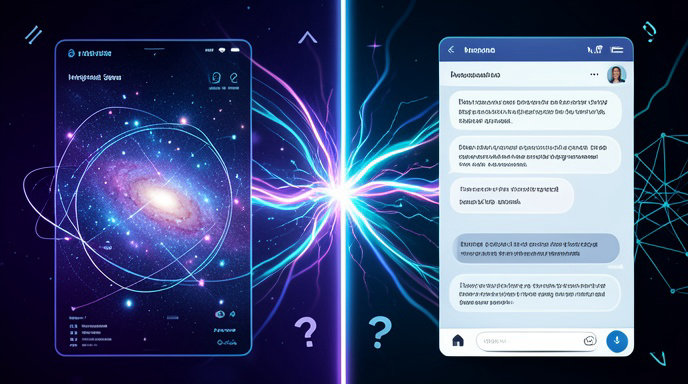
Galaxy.ai and ChatGPT solve overlapping problems, but they are not identical tools: ChatGPT is a standalone conversational AI platform with strong custom workflows, broader product maturity, and enterprise features, while Galaxy.ai is positioned as an all-in-one bundle that gives access to multiple models and creative tools under one subscription. For everyday use, the better choice depends on whether you want a single polished assistant or a multi-model toolbox.
Galaxy.ai vs ChatGPT: Which AI Tool Wins for Everyday Use?
If you are trying to decide between Galaxy.ai and ChatGPT for daily writing, research, automation, and creative work, the key question is not simply which model is “smarter.” It is whether you value consistency and product depth or breadth and flexibility. ChatGPT is widely described as a versatile assistant for answering questions, generating content, summarizing text, brainstorming, and organizing workflows, with access through web and apps and tiered plans from free to advanced subscriptions. Galaxy.ai, by contrast, is described as a platform that bundles multiple AI models such as GPT-4o, Claude 3.5 Sonnet, Gemini Pro, and Llama 3.1, plus tools like real-time web search, PDF analysis, image generation, voice chat, and interactive “Artifacts.”
The practical takeaway is straightforward: ChatGPT is typically stronger when you want a dependable primary assistant with a mature interface and workflow features, while Galaxy.ai is attractive if you want to switch between several models and tools without paying for separate subscriptions.
What each tool is trying to be
ChatGPT is built as a general-purpose AI assistant. It supports natural conversation, creative writing, summarization, brainstorming, coding help, and workflow support, and its higher tiers add capabilities like deeper research, custom GPTs, Canvas, and access to advanced models. It is also available as an API, which matters if you want to embed AI into products or internal systems.
Galaxy.ai is framed more like an AI aggregation layer. According to the available sources, it provides access to multiple large language models in one subscription and includes bundled capabilities such as real-time search, document analysis, image generation, and voice chat. One source explicitly calls it a “Swiss Army knife” of AI platforms because it combines tools that would otherwise be spread across separate services.
That difference shapes the user experience. ChatGPT tries to be one strong assistant with a deep product ecosystem. Galaxy.ai tries to be a unified hub that lets you move between model strengths and media tools quickly.
Writing quality: which one produces better everyday text?
For writing tasks, both tools can be useful, but their strengths differ.
ChatGPT is presented as a strong general writing assistant for emails, reports, summaries, brainstorming, and copywriting. One comparison notes that ChatGPT offers more consistent outputs and supports custom GPTs, which can help maintain brand voice or repeat a preferred writing style across projects. That makes it appealing for users who want predictable drafts and a stable editorial feel.
Galaxy.ai’s main advantage in writing is choice. One source notes that it lets users leverage different models for different writing needs, with Claude used for natural writing, GPT-4o for technical accuracy, and Gemini for research. That means Galaxy.ai may be better if you routinely compare outputs, want to refine tone by switching models, or prefer not to rely on one model’s style.
For everyday writing, the tradeoff is clear:
- ChatGPT is usually better for consistency, reuse, and building repeatable writing workflows.
- Galaxy.ai is better for experimentation and for users who want to compare multiple drafting styles in one place.
If your writing needs are mostly emails, blog drafts, summaries, and general office work, ChatGPT is the safer default. If your work benefits from model diversity and you enjoy steering the output yourself, Galaxy.ai has an edge.
Workflow automation and productivity
This is one of the biggest dividing lines.
ChatGPT is designed as a productivity companion that can organize workflows, summarize documents, draft emails, brainstorm ideas, and support project editing through features such as Canvas and custom GPTs. Those features matter because they help turn ChatGPT from a chat box into a repeatable work environment. For many users, that makes ChatGPT feel more polished and easier to operationalize for daily tasks.
Galaxy.ai appears stronger as a tool bundler than a workflow system. Its value proposition is that you can access multiple models and functions in one subscription, and even switch models during a conversation. That can be extremely useful if your workflow depends on using different AI strengths at different stages, such as writing, revision, research, and image generation. However, the same source notes that this flexibility requires more active management than ChatGPT’s more consistent experience.
A simple way to think about it:
- ChatGPT helps you build stable workflows inside one assistant.
- Galaxy.ai helps you assemble a workflow from multiple model strengths inside one platform.
For users who want the least friction, ChatGPT is easier to live with every day. For users who want a broader toolkit and are comfortable switching modes, Galaxy.ai can be more efficient.
Research and real-time information
Research is another area where the comparison is nuanced.
ChatGPT is described as supporting search capabilities for real-time information, and higher-tier plans unlock deeper research features. That suggests it is designed for users who want a conversational interface that can also do more serious information gathering. Because ChatGPT is also positioned as a broad assistant for casual questions and complex research, it is the more mature research-centered product overall.
Galaxy.ai also includes real-time web search and PDF analysis, and it can switch between different models mid-conversation. In practice, that may be helpful for research because you can use one model to search, another to synthesize, and another to rewrite the result. The source specifically notes that Gemini may be used for research and GPT-4o for technical accuracy inside Galaxy.ai.
The key difference is not whether either tool can research; both can. The difference is how the output is managed:
- ChatGPT offers a more unified research experience with product-level features aimed at workflow continuity.
- Galaxy.ai offers a more modular research process where different models can be applied to different stages.
If your work involves frequent fact-finding, document review, or drafting from source material, ChatGPT is the more established research companion. If you want to compare answers from multiple models without leaving one platform, Galaxy.ai may be the more flexible choice.
Image generation and visual tasks
Galaxy.ai has a clear advantage here based on the available information. One source states that Galaxy.ai includes image generation with DALL-E 3 and Stable Diffusion, alongside voice chat and other creative tools. That makes it a stronger all-in-one option for users who want text and image work in the same subscription.
ChatGPT can also be used for creative content and is part of a larger AI ecosystem, but the sources provided emphasize writing, workflow, research, custom GPTs, and enterprise features more than image generation. In other words, the evidence here points to Galaxy.ai being more explicitly packaged for multimodal creative work.
For everyday use, this means:
- Galaxy.ai is more compelling if image generation is a regular need.
- ChatGPT is better if image generation is occasional and your main focus is text-based work.
Ease of use and day-to-day experience
ChatGPT generally appears easier to recommend for most users because it is a focused product with a familiar conversational interface, a free tier, mobile and desktop access, and a clearer path from casual use to advanced usage. Its strengths are reinforced by features like custom GPTs, Projects, and Canvas, which make the environment feel organized and coherent.
Galaxy.ai is easier to describe than it is to master. The platform’s appeal is obvious: one subscription, multiple models, and access to many AI functions in one place. But that same breadth can make the experience more active and less streamlined, because users may need to decide which model to use for each task. One source explicitly says the tradeoff is “more flexibility, but requires more active management.”
So in terms of daily usability:
- ChatGPT wins on simplicity and consistency.
- Galaxy.ai wins on breadth and optionality.
If you want an AI assistant that feels predictable and low-effort, ChatGPT is easier to adopt. If you enjoy having many models and tools at your fingertips, Galaxy.ai may feel more powerful.
Pricing and value for money
Galaxy.ai’s pricing appeal is central to its pitch. One source claims the platform bundles capabilities that would otherwise require several separate subscriptions and describes it as a lower-cost way to access multiple premium models and tools. It also states that Galaxy.ai offers a free trial but no permanent free tier.
ChatGPT has a more established pricing ladder, including a free tier and paid plans with additional capabilities. The sources also emphasize that advanced plans unlock deeper research, more powerful models, and collaboration features. Another source notes that ChatGPT is free to use with access across web and apps, though premium tiers expand what is available.
From an everyday-use standpoint, the value question is not only about cost. It is about whether you actually use the bundled extras.
- If you would otherwise pay for several AI tools separately, Galaxy.ai can look attractive.
- If you mostly need one strong assistant with a free entry point and a more mature product experience, ChatGPT may be the better value.
Best fit by user type
Choose ChatGPT if you are:
- A writer who wants consistent drafts and repeatable tone control.
- A student or professional who needs a reliable all-purpose assistant for summaries, emails, brainstorming, and research.
- A team or company that needs enterprise features such as admin controls, compliance, and API access.
- Someone who prefers a cleaner, more established product experience.
Choose Galaxy.ai if you are:
- A power user who wants access to multiple models in one place.
- Someone who likes comparing model outputs for writing or research.
- A creator who wants text, web search, PDF analysis, voice, and image generation in a single subscription.
- A user who values flexibility more than a highly structured workflow environment.
Everyday scenarios and which tool fits better
- Writing emails and quick drafts: ChatGPT is the easier default because it is built for consistent conversational assistance and productivity tasks.
- Comparing different writing styles: Galaxy.ai is stronger because it lets you switch between models like Claude, GPT-4o, and Gemini.
- Summarizing documents and webpages: Both can do this, but ChatGPT feels more established as a general productivity assistant, while Galaxy.ai adds model-switching flexibility.
- Researching a topic: ChatGPT is the more mature standalone research companion, while Galaxy.ai is useful if you want to cross-check multiple model perspectives.
- Generating images: Galaxy.ai has the clearer advantage because image generation is explicitly part of its bundled offering.
- Building repeatable workflows: ChatGPT is better because of custom GPTs, Projects, and Canvas.
- Using one subscription for many AI tools: Galaxy.ai is designed for exactly that use case.
The practical decision rule
If you want one AI assistant that feels polished, consistent, and easy to build around, ChatGPT is the stronger everyday choice. If you want a broader toolkit that combines multiple models and creative features into one subscription, Galaxy.ai is more compelling.
A useful rule of thumb is this:
- Pick ChatGPT for stability, workflow depth, and day-to-day reliability.
- Pick Galaxy.ai for model variety, bundled value, and creative flexibility.
What most everyday users should prioritize
When choosing between Galaxy.ai and ChatGPT, most people should focus on four questions:
- Do I want the same assistant every time, or do I want to switch models?
- Do I mainly write and organize work, or do I want text plus images plus search in one place?
- Do I care more about workflow features like custom GPTs and projects, or about bundling multiple tools together?
- Do I want a product that feels stable and established, or one that feels like an AI toolkit?
The answer to those questions will usually point to ChatGPT for most mainstream users and Galaxy.ai for power users who want more flexibility.
Why AI4Chat Fits Everyday AI Use Better
If you’re comparing Galaxy.ai vs ChatGPT for daily tasks, AI4Chat gives you a practical edge: one place to chat, research, write, and work with files without jumping between tools. It’s built for the real-life use cases people rely on most—quick answers, smarter drafting, and organized conversations that stay easy to revisit.
A Smarter Chat Experience for Daily Work
For everyday use, the most important thing is getting helpful responses fast and keeping your work organized. AI4Chat’s AI Chat supports top models like GPT-5 series, Claude 3.5, Google Gemini 3, Llama, Mistral, and Grok, so you can choose the style and quality that fits each task. With Branched Conversations, Draft Saving, Folders, and Labels, it’s easy to manage multiple projects at once instead of losing track of important chats.
- AI Chat with leading models for flexible everyday answers
- Branched Conversations to explore ideas without losing your main thread
- Draft Saving, Folders, and Labels to keep work organized
Better for Writing, Research, and Working With Files
AI4Chat is especially useful when your daily workflow goes beyond simple chatting. Its AI Chat with Files and Images lets you upload documents, screenshots, or visuals and ask questions directly about them. Pair that with Google Search and Citations, and you get a more reliable way to verify information, summarize content, and create better responses for work, study, or personal projects.
- AI Chat with Files and Images to analyze documents and visuals instantly
- Google Search for up-to-date information during research
- Citations for more trustworthy, checkable answers
Whether you’re drafting content, comparing ideas, or handling everyday questions, AI4Chat combines strong models with practical tools that make the experience smoother and more productive than a basic chatbot.
Conclusion
Galaxy.ai and ChatGPT both offer powerful ways to work with AI, but they serve different everyday needs. ChatGPT is the better choice if you want a polished, reliable assistant with stronger workflow features, clearer product depth, and a more established experience. Galaxy.ai is more appealing if your priority is access to multiple models and bundled creative tools in one place.
For most users, the decision comes down to whether they want consistency or flexibility. If you want one dependable assistant for writing, research, and productivity, ChatGPT is the safer bet. If you want a broader AI toolbox that lets you compare models and handle more varied tasks, Galaxy.ai may be the better fit.